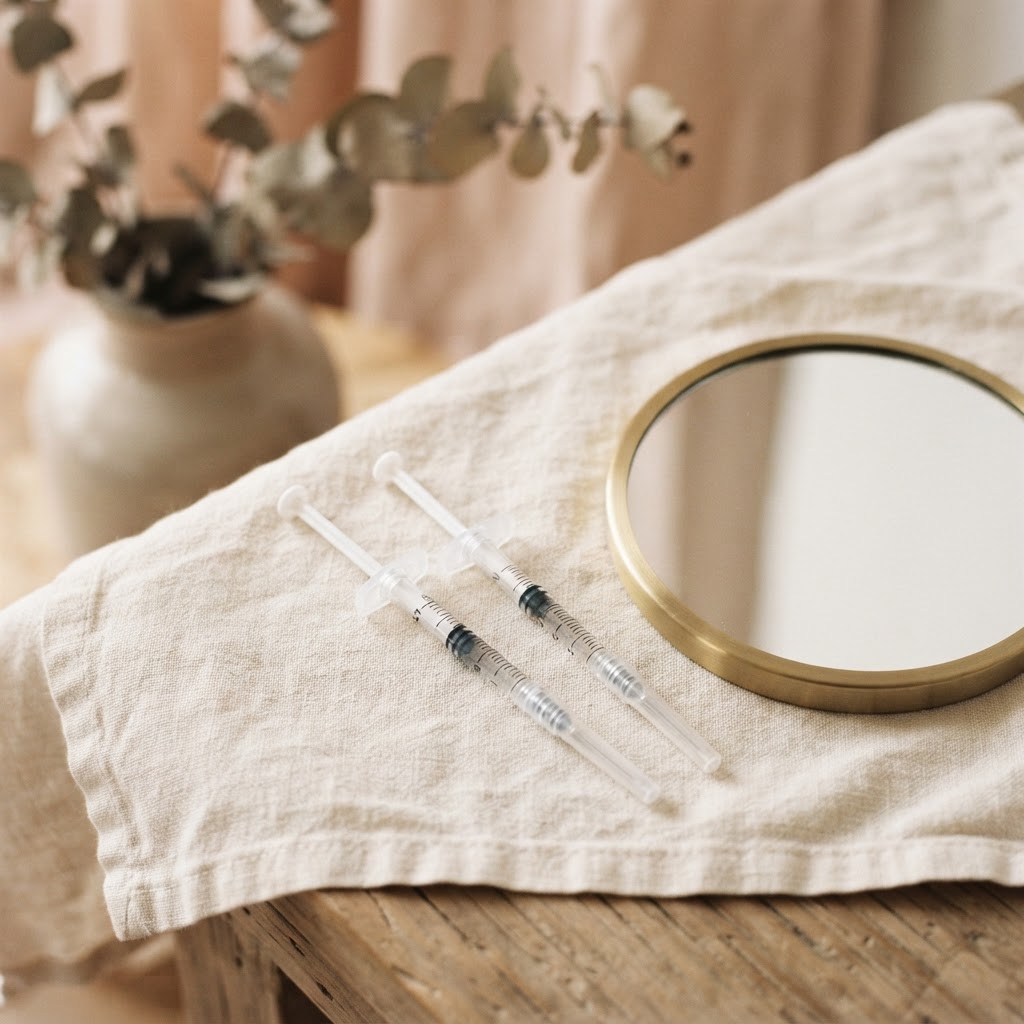



Ten years ago the request was usually a single feature: lips, or cheeks, or a jawline. Now it is more often a sentence about the whole face, and it usually ends with the same condition. I do not want to look done.
Facial harmonisation is the clinical answer to that request. It is not a product, and it is not a package. It is a way of assessing and treating the face as a set of proportions rather than a collection of parts.
What harmonisation actually means
The face is read by the eye in relation to itself. Vertical thirds, horizontal fifths, the angle of the jaw against the cheek, the projection of the mid-face relative to the chin. When one feature is treated in isolation, the eye notices the change in proportion even when the feature itself looks well done. That is why an overfilled lip on an otherwise soft face reads as obvious, while a well judged chin can change the whole profile without anyone naming it.
So harmonisation starts with measurement and ends with restraint.
How the assessment works
We look at the face at rest, in motion, from the front and in profile, and in natural light. Then four questions:
- What is structurally missing, as opposed to what is simply disliked?
- Which change would alter the overall impression, rather than only the part?
- What does the skin itself need, since no amount of product fixes texture or pigment?
- What is the smallest intervention that would achieve the first three?
That last question is the one that separates harmonisation from a treatment menu. It is also why full face work often uses less product, spread more carefully, than a series of single feature appointments.
Where product belongs, and where it does not
Volume restoration in the mid-face, conservative chin projection, and jawline definition are the changes that most reliably alter the overall balance of a face. They are also the areas where the wrong amount is most visible. Lips, treated alone, are the classic example of a feature that can look excellent and still throw the face out of proportion.
Where the concern is skin quality rather than structure, product is the wrong tool. Dullness, crepey texture, pore size and pigment are addressed with energy devices, peels or skin quality injectables, which is the reasoning set out in treatment stacking.
And where the concern is movement, the answer is often a small dose of anti-wrinkle treatment rather than filler. Soft dosing keeps expression, which is a large part of looking like yourself. The distinction between conservative and standard dosing is covered in what are tweakments.
The three things that make a face look done
In my experience, it is rarely the amount of product. It is these:
- Treating one feature repeatedly without re-assessing the whole. Each appointment adds a little; nobody steps back to look at proportion.
- Chasing a reference image. A face is not a template, and the same volume that suits one face distorts another.
- Ignoring skin. Placed product on dull or uneven skin reads as placed product. Improved skin makes subtle work invisible.
What "undetectable" requires of the patient
Patience, mostly. Harmonisation is built in stages, often months apart, with assessment between them. It also requires honesty about what you actually want changed, because a vague request invites a practitioner to guess, and guessing is where faces go wrong.
The fuller thinking on this shift is in regenerative aesthetics and undetectable maintenance and quiet luxury aesthetics. For the treatment routes, see full face rejuvenation and dermal fillers.
Questions patients ask
Does harmonisation mean more product overall?
Usually less per area and more thought per face. The total over a year is often similar to a series of single feature appointments, spent better.
Can it be done in one appointment?
Small changes can. Genuine structural balance is built over time, and staged work lets the face settle and be assessed honestly.
What if I already look overfilled?
Sometimes dissolving is appropriate for hyaluronic acid products. Sometimes the answer is time and a plan for the skin. It needs an assessment, not a package.
If you would like your face assessed as a whole rather than by feature, book a consultation.