


Both treatments are sold as non-surgical tightening, both are described as lifting, and both appear in the same price lists. They are not the same procedure, they do not work at the same depth, and for a given face one is often clearly more appropriate than the other. This is how I explain the difference in clinic.
What RF microneedling does
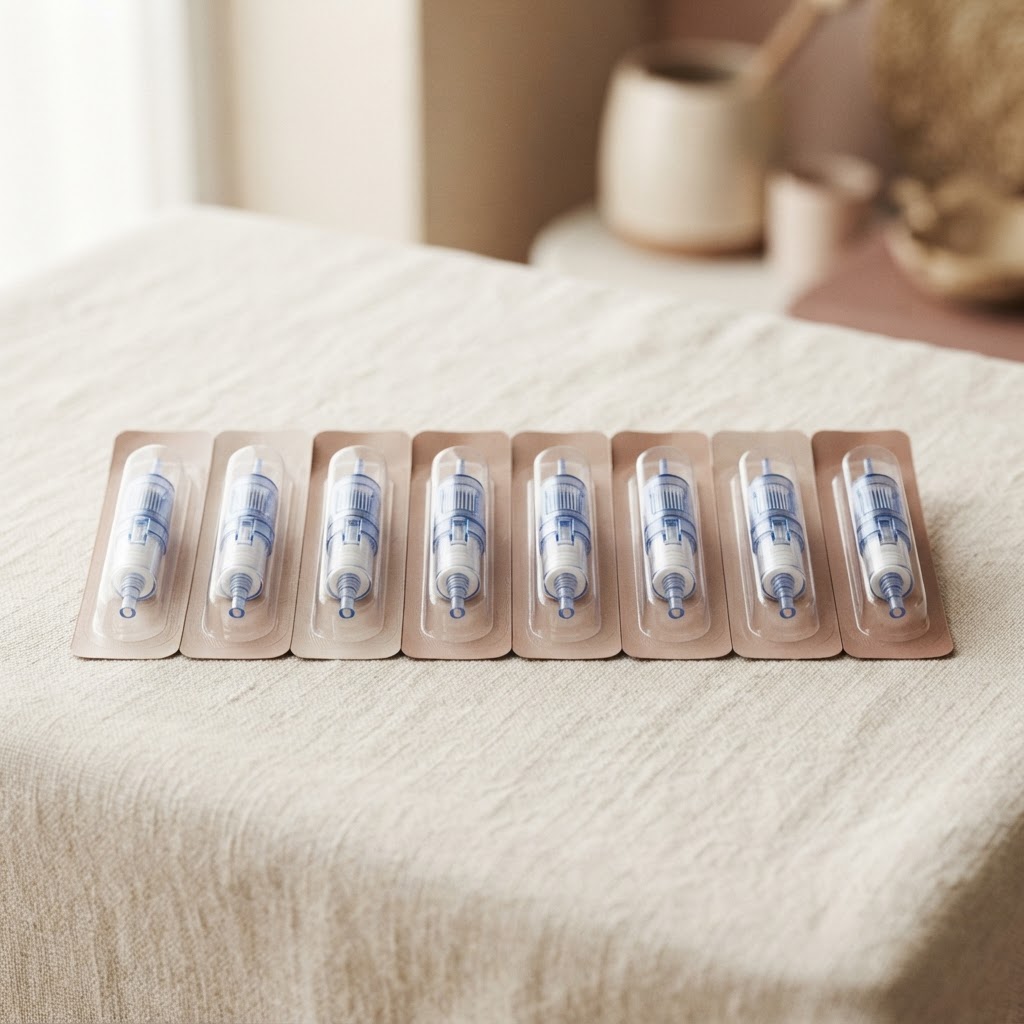
Fine insulated needles are inserted into the dermis and radiofrequency energy is delivered at a chosen depth. The needles create controlled micro-injury; the heat remodels collagen and stimulates new collagen over the following months. Because the energy is delivered below the surface, the epidermis is largely spared, which is why downtime is usually short.
It is a treatment of skin quality and texture as much as tightening: pore size, acne scarring, fine lines and crepey texture all respond to some degree. Most patients need a course, typically three sessions spaced four to six weeks apart, with results building over three to six months.
More detail sits on our RF microneedling page and in Morpheus8.
What HIFU does
High intensity focused ultrasound delivers energy to deeper planes, including the superficial musculoaponeurotic system and the deeper dermis, without breaching the skin surface. The intended effect is contraction and collagen stimulation at depth, aiming at a lifting effect rather than a surface one.
It is genuinely non-invasive, with no needles and typically no downtime. A single session is often quoted, with results developing over two to three months. Our HIFU page covers the practicalities.
Where the honest comparison sits
- Depth: HIFU works deeper; RF microneedling works through the dermis at adjustable depths.
- Texture: RF microneedling has the clearer effect on pores, scarring and surface quality. HIFU does comparatively little for texture.
- Tightening: HIFU aims at lifting; RF microneedling at collagen density and firmness. Neither is a facelift.
- Downtime: RF microneedling usually brings a day or two of redness; HIFU typically none.
- Sessions: RF microneedling is a course; HIFU is often one to two sessions.
On the evidence: RF microneedling has a reasonable body of published work for skin tightening and scarring, with modest but measurable changes. HIFU studies show tightening effects that vary considerably between patients, and the marketing around it has historically run well ahead of the data. Both are real treatments with real, modest effects. Neither replaces surgery, and any clinic suggesting otherwise is overselling.
Which face suits which
RF microneedling tends to suit
Skin with enlarged pores, fine lines, early crepey change, acne scarring, or texture concerns, including patients who want gradual improvement with predictable downtime. It also works well on the neck and around the mouth, where HIFU is harder to deliver evenly.
HIFU tends to suit
Patients with mild to moderate laxity along the jawline or brow who want a no-downtime option, and who understand the effect will be subtle. It suits thicker tissue better than thin, and it is not a good choice for someone expecting a surgical result.
Where neither is the answer
Significant skin excess, heavy descent of tissue, or true volume loss. In those cases the honest conversation is about what these devices can and cannot achieve, and sometimes about referral.
Can they be combined?
Yes, and often they are, with a gap between sessions so the tissue can respond. Combining them with skin boosters or polynucleotides addresses quality alongside tightening. The sequencing logic is set out in treatment stacking.
Questions patients ask
Is HIFU painful?
It is often described as uncomfortable rather than painful, with deeper passes felt more than superficial ones. Tolerance varies.
How long do results last?
RF microneedling results typically hold for around six to twelve months depending on skin and maintenance. HIFU varies widely, and honest expectations are modest.
Can I have either if I have filler?
Usually yes, with appropriate spacing. Tell your practitioner what you have had and when.
If you are deciding between the two, a consultation with an assessment of your tissue, not just your concern, is the only sensible way to choose.